
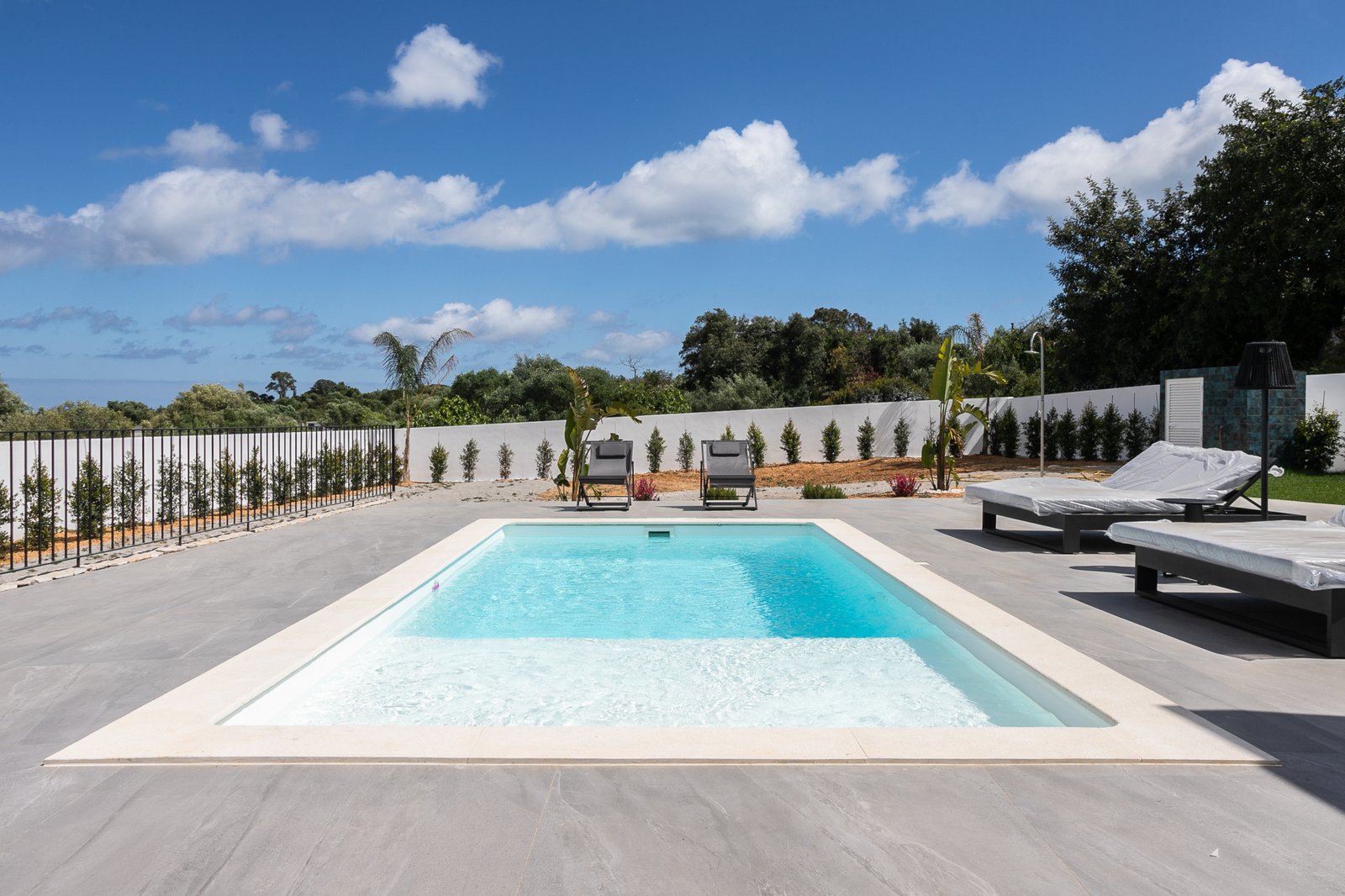
Buying property in the Eastern Algarve has quietly become one of the smartest moves an international buyer can make. While Vilamoura and Quinta do Lago take the headlines and the highest price tags, the coastline east of Faro — the Sotavento — offers something increasingly hard to find in southern Europe: working Portuguese towns, the protected lagoons of the Ria Formosa, and villas at a fraction of what the western Algarve commands.
It is not a secret to everyone. Dutch, German, Irish and British buyers have been arriving steadily for a decade. But it remains dramatically better value, and at Marvell Home eight of our ten current listings sit in this corner of the region.
This guide covers where to buy, what you will genuinely pay in tax and fees in 2026, and what changed this year for owners who plan to rent out.
Where is the Eastern Algarve?
The Eastern Algarve — Sotavento, meaning “leeward” — runs from Olhão eastwards to Vila Real de Santo António on the Spanish border, with São Brás de Alportel sitting just inland.
Its defining feature is the Ria Formosa Natural Park: roughly 60 kilometres of lagoons, salt marshes and barrier islands that shelter the coast. The practical effect is a calmer, warmer sea than the Atlantic-facing west, beaches you reach by a short ferry hop, and a landscape that cannot be built on. That protection is the single biggest reason the area has kept its character.
Three things matter when you are buying property in the Eastern Algarve:
- Faro airport is 15 to 45 minutes away from most of the Eastern Algarve, closer than much of the western coast
- Development is limited by the Natural Park, so supply stays tight and views stay open
- Towns still function year-round, with working fishing fleets, markets and schools rather than seasonal shutters
The best places for buying property in the Eastern Algarve
Tavira
The elegant one. Tavira is a riverside town of Roman bridges, tiled churches and a genuine café culture, consistently rated among Portugal’s most attractive towns. It has enough restaurants and services to work as a year-round base, and Tavira Island’s beach is a ten-minute ferry ride.
Prices reflect that appeal, but they are still well below Lagos or Vilamoura for comparable quality. Our two Tavira villas illustrate the range:
- New T4+1 Villa in Tavira — Sea Views, Rooftop & Private Pool — 4+1 bedrooms, 4 bathrooms, 285 m², €790,000
- Villa with Pool & Sea Views — Tavira — 4+1 bedrooms, 3 bathrooms, €845,000
Cabanas de Tavira
A smaller, quieter alternative five minutes from Tavira, built along a waterfront boardwalk facing its own sandbar island. Cabanas suits buyers who want lock-up-and-leave simplicity and strong holiday rental appeal without the maintenance of a villa.
- Royal Cabanas Beach II — Apartments for Sale in Cabanas de Tavira — 2 bedrooms, 2 bathrooms, 71 m², from €535,000
Fuseta
Our own favourite, and the area we know best. Fuseta is a working fishing village on the Ria Formosa where the boats still go out every morning and the beach is a two-minute ferry crossing. It has resisted the resort treatment almost entirely, yet sits 25 minutes from Faro airport.
For buyers, Fuseta offers the widest range in the Eastern Algarve:
- Apartments with Private Pools — Fuseta — 2 bedrooms, 3 bathrooms, 97 m², from €605,850
- Villa Fuseta — Smart Home with Pool — 3 bedrooms, 3 bathrooms, 150 m², €680,000
- Villa T5 de Luxo — Fuseta — 5 bedrooms, 5 bathrooms, 286 m², €795,000
- Villa Prestige — Luxury V3 with Pool & Sea Views, Fuseta — 3 bedrooms, 3 bathrooms, 184 m², €1,250,000
Olhão and Bias do Sul
Olhão is the Algarve’s largest fishing port and its most architecturally unusual town, with flat-roofed cube houses that look more North African than European. It has become genuinely fashionable in recent years without losing its market-town core. Just outside, Bias do Sul offers elevated plots with open water views.
- Exceptional Single-Level Villa with Pool & Ocean Views — Bias do Sul, Olhão — 4 bedrooms, 4 bathrooms, 253 m², €1,750,000
São Brás de Alportel
Twenty minutes inland and noticeably cooler in August, São Brás sits in the foothills among cork oak and orange groves. It appeals to buyers who want space, privacy and a garden rather than a beach on the doorstep — while still being half an hour from the coast.
- Stunning New-Build Villa — 4 Bedrooms, Private Pool, São Brás de Alportel — 4 bedrooms, 4 bathrooms, 261 m², €1,250,000
What buying property in the Eastern Algarve actually costs in 2026
The purchase price is only part of what buying property in the Eastern Algarve will cost you. The largest additional cost is IMT (Imposto Municipal sobre as Transmissões), Portugal’s property transfer tax, charged on the higher of the purchase price or the property’s rateable value.
Most international buyers purchase a second or holiday home, which falls under the non-permanent residence scale. These are the 2026 rates published in PwC Portugal’s 2026 Tax Guide:
| Property value | IMT rate |
|---|---|
| Up to €106,346 | 1% |
| €106,346 – €145,470 | 2% |
| €145,470 – €198,347 | 5% |
| €198,347 – €330,539 | 7% |
| €330,539 – €660,982 | 8% |
| €660,982 – €1,150,853 | 6% flat on the whole value |
| Above €1,150,853 | 7.5% flat on the whole value |
The two thresholds worth knowing
Notice what happens at the top of the table. Below €660,982 the rates are marginal and climb to 8%. Above it, a single flat rate applies to the entire purchase price — and it drops to 6%.
The consequence is a genuine cliff edge at €1,150,853:
- A property at €1,150,853 attracts 6% IMT — €69,051
- A property at €1,150,854 attracts 7.5% IMT — €86,314
One euro more on the price costs over €17,000 in extra tax. If you are negotiating anywhere near that figure, it is worth knowing before you make an offer.
Worked examples from our current listings
| Property | Price | IMT | Stamp duty (0.8%) |
|---|---|---|---|
| Royal Cabanas Beach II, Cabanas | €535,000 | ~€30,100 | €4,280 |
| Villa Fuseta smart home | €680,000 | €40,800 | €5,440 |
| Villa with Pool & Sea Views, Tavira | €845,000 | €50,700 | €6,760 |
| Villa Prestige, Fuseta | €1,250,000 | €93,750 | €10,000 |
On top of IMT and stamp duty, budget for:
- Notary and land registry fees — roughly €1,000 to €2,000
- Independent legal fees — typically 1% to 2% of the purchase price
- Estate agency commission — paid by the seller in Portugal, not the buyer
- Mortgage stamp duty, if you borrow — 0.6% of the loan for terms over five years
If you are relocating permanently rather than buying a holiday home, a separate and more generous IMT scale applies, starting at 0% below €106,346. These figures are general guidance, not tax advice — confirm your own position with a Portuguese lawyer or accountant before committing.
Renting it out: the 2026 Alojamento Local rules
If holiday rental income is part of your plan, 2026 is a considerably better year than 2023 was. Several things have changed:
- The national freeze on new licences has been lifted. The blanket suspension introduced in 2023 was revoked; individual municipalities now set their own rules, so the answer depends on the specific town
- AL registrations no longer expire and do not need periodic renewal
- Licences now transfer with the property. An existing AL registration passes to the buyer on sale rather than lapsing — which makes a property that already holds one materially more valuable
- Platform enforcement becomes mandatory from 20 May 2026 under EU Regulation 2024/1028. Listings without a valid registration number face automatic removal from booking platforms
- Operating without registration carries fines of up to €40,000
The practical takeaway when buying property in the Eastern Algarve as an investment: ask whether the property already holds an AL registration, and confirm the current position with the relevant câmara municipal before you commit.
The buying process, briefly
The legal process for buying property in the Eastern Algarve is the same as anywhere in Portugal: obtain a NIF tax number, open a Portuguese bank account, appoint an independent lawyer, sign the CPCV promissory contract with a deposit of 10–30%, then complete at the notary.
We cover each stage in detail in our complete guide to buying property in the Algarve.
Why buyers choose Marvell Home
Marvell Home by Groupe Mackay Prestige (AMI 17430) is a boutique agency, and the Eastern Algarve is where we are strongest — it is where most of our portfolio sits and where we live and work.
Our team speaks Portuguese, English, French, German and Spanish, and clients are matched with an agent who speaks their language: Yvonne Mieschalla and Rico Jansen look after German-speaking buyers, Cátia Guedes works in Portuguese and English, and Bruno Pires handles construction and investor clients.
You can meet the full team here.
Buying property in the Eastern Algarve: common questions
Is buying property in the Eastern Algarve cheaper than the western Algarve?
Generally yes. For the same budget you will typically find more space, more land and better sea views east of Faro than in Lagos, Vilamoura or Quinta do Lago. The gap is narrowing as the area becomes better known, particularly in Tavira and Olhão.
Do I need a NIF number before buying property in the Eastern Algarve?
Yes. A NIF (Número de Identificação Fiscal) is required before you can purchase, open a bank account or sign a promissory contract. Your lawyer can obtain one for you, usually within a few days, and you do not need to be resident in Portugal to hold one.
Can I rent my property out on Airbnb?
Only with a valid Alojamento Local registration. Since the 2023 national freeze was lifted, municipalities set their own rules, so the answer depends on the specific town — and from 20 May 2026, platforms must remove listings without a valid registration number. If rental income matters to you, check this before making an offer.
How long does the purchase take?
For a straightforward purchase with no mortgage, allow around eight to twelve weeks from accepted offer to notary deed. A Portuguese mortgage typically adds four to six weeks for valuation and approval.
Can I buy as a non-resident?
Yes. Portugal places no restrictions on foreign buyers, and there is no requirement to hold residency or a visa to own property. Buying a home does not itself grant residency rights.
Start your search
If you are considering buying property in the Eastern Algarve, we would be glad to help — whether you are ready to view or simply working out whether Tavira or Fuseta suits you better.
Buying property in the Eastern Algarve rewards people who visit properly, in more than one season, and who take local advice before committing. That is the part we enjoy most.
Browse our current Algarve listings or get in touch with us directly.
📞 +351 962 580 101 ✉️ filipa@groupemackay.com

Join The Discussion